



Have you ever looked at two Bitcoin mining pools and seen two different fee numbers? One pool shows 2%. Another shows 4%. It is easy to think the cheaper pool is always the better deal. But that is not always true.
The fee number alone does not tell the whole story, because it matters just as much how the pool actually pays you. Pools use different payout plans, and each plan changes how steady your daily earnings feel, even when your mining hardware never changes at all.


This guide explains the main payout methods in plain words: PPS, PPS+, FPPS, and PPLNS. By the end, you will know what each one means, and why the fee percentage is only half the picture.
What a Mining Pool Fee Actually Pays For
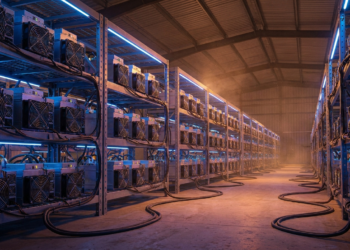
A mining pool is a large group of miners working together, combining their hashrate, which is simply a word for mining power. Working together this way, the group discovers Bitcoin blocks far more often than any single miner ever could alone.
When the pool discovers a block, it earns a reward, which it then splits among everyone who contributed, based on the amount of work each person put in. The pool fee is the small slice the pool keeps for itself, and that fee covers the cost of the pool’s servers, its staff, and the tools it builds for miners.
A fee of 0% to 4% is common, depending on the payout method. And the payout method matters just as much as the fee size. It decides how your daily reward gets calculated, and how much that reward can bounce around from day to day.
PPS: Pay Per Share
PPS stands for Pay Per Share. It is the simplest idea, and most other methods are built from it. Under PPS, the pool pays you a fixed amount for every valid “share” of work you submit. A share is just proof that your hardware did some real mining work.
With PPS, you receive the same payment per share no matter how lucky or unlucky the pool happens to be that day. If the pool finds a lot of blocks, you do not receive extra money. If the pool finds very few blocks, you still receive your normal payout, because the pool absorbs the ups and downs of luck instead of passing them on to you.
That steadiness comes at a cost. Plain PPS is often the most expensive payout method for miners, since the pool is taking on more risk. Many pools have moved on to newer versions of this idea instead.
PPS+: A Popular Middle Ground
PPS+ (Pay Per Share Plus) improves on plain PPS. You still get a guaranteed base payout for every share, just like PPS. But PPS+ also adds in a share of the real transaction fees the pool collects, based on the blocks it actually finds.
This blend keeps your base payout steady. It also lets you earn a bit more when the pool has a good day. ViaBTC is one of the larger Bitcoin mining pools. It offers this PPS+ option. Fees for this method commonly run from 2% to 4%. You can see ViaBTC’s current payout options and fees here. (This is an affiliate link. If you sign up through it, MinerSignal may earn a commission at no extra cost to you.)
FPPS: Full Pay Per Share
FPPS stands for Full Pay Per Share. It takes the steady idea of PPS one step further.
Bitcoin miners can earn money two ways. One is the block reward. The other is the transaction fees people pay to send Bitcoin. FPPS guarantees both parts. The pool works out the average transaction fees across many recent blocks. Then it adds that average into your payout, on top of the base mining reward. You get steady pay every day, no matter how many blocks the pool found that day.
FPPS spreads out both parts of the reward. Because of this, it often pays a little more than plain PPS over time. It still charges a small, fair fee. This makes it a popular choice for miners who want steady numbers without giving up too much to fees.
PPLNS: Pay Per Last N Shares
PPLNS stands for Pay Per Last N Shares. This one works very differently from the others.
PPLNS looks back at your last N shares, where N is simply a number the pool decides on ahead of time. It checks this list of recent shares each time the pool actually discovers a block. Your payout then depends on how many of those recent shares belonged to you, compared with everyone else contributing to the pool.
This means your daily earnings can swing up and down considerably. If the pool gets lucky and discovers several blocks in a short stretch, your payout that day can end up higher than PPS or FPPS. If the pool instead goes through an unlucky stretch without finding any blocks, your payout can drop noticeably lower. Over many weeks, PPLNS tends to average out to something close to what the other methods would pay, but day to day, it feels considerably less steady.
Because the pool is not covering that risk for you, PPLNS pools often charge the lowest fees of all, sometimes close to 0%. You are trading a smoother, more predictable income for a smaller fee.
Which One Should You Pick?
There is no single best answer. It depends on what you care about more: steady numbers or lower fees.
- Pick PPS+ or FPPS if you want your daily earnings to look about the same each day, even if the fee runs a bit higher.
- Pick PPLNS if you don’t mind some ups and downs, and you would rather pay a smaller fee over time.
- Pick FPPS over plain PPS when a pool offers it, since it usually pays a bit more for a similar steady feel.
Always check a pool’s own fee page before you connect your hardware. Fees and payout options change over time, so the pool’s current page is always the most accurate source.
A Word on “Zero Fee” Pools
Some pools advertise a 0% fee to attract miners, which is not automatically a red flag, but it deserves a second look. A pool still has to cover the cost of its servers and staff somehow. A 0% fee pool sometimes makes up for it through a slightly less generous payout method, or by tucking other costs into the withdrawal process. Read the fine print carefully before you assume “free” really means free.
Why This Still Matters If You Rent Hashrate Instead of Owning Hardware
Some miners never touch a mining pool’s dashboard at all, and instead use a service like GoMining, which lets you gain mining power through an app without ever buying or running a physical machine yourself. Behind the scenes, GoMining spreads its hashrate across several partner mining pools, including Binance Pool, rather than relying on just one.
Even if you never pick a payout method yourself, the pool behind your hashrate still uses one of the methods above. Knowing the difference between PPS, PPS+, FPPS, and PPLNS helps explain why payouts move the way they do. That is true whether you run the hardware or rent the hashrate. If you want to see how that side of mining works, you can look at GoMining here. (This is an affiliate link. If you sign up through it, MinerSignal may earn a commission at no extra cost to you.)
How This Connects to Solo Mining and Revenue Sharing
Pool payout methods only matter because you mine together with other people. You share the work, and you share the reward. Some miners skip pools completely. They try to mine entirely alone instead. That path has very different math and very different odds. We break it down fully in Solo Bitcoin Mining, Explained.
If you already mine with a partner or split earnings with family, the payout method your pool uses shapes how that split feels day to day. We cover the tool ViaBTC built for that exact situation in ViaBTC Revenue Sharing, Explained.
The Honest Take
No payout method magically generates more money for you over the long run. PPS, PPS+, FPPS, and PPLNS are simply different ways of spreading out the same overall luck of the network, and over a long enough stretch of time, they tend to land in a fairly similar place.
What changes is how bumpy the ride feels along the way, and how much of your reward the pool keeps as its fee. Pick the plan that matches how much you want your daily numbers to swing, not just the plan with the smallest fee printed on the page.
This post is for general information and education only, not financial or investment advice. Bitcoin mining income is never guaranteed, and nothing here should be read as a promise of what you will earn. Fee percentages, payout methods, and pool policies mentioned here are estimates based on public information at the time of writing and can change. Always check a pool’s own current fee page before making a decision.
Sources: What Are Mining Pool Fees? PPS/PPS+/FPPS/PPLNS Fee Structures — ViaBTC, How to Choose the Optimal Payment Method (PPS+, PPLNS) — ViaBTC Help Center, How Are Profits Calculated — ViaBTC Help Center, Rewards & Payouts — Braiins Academy, Bitcoin Mining Pools GoMining Mines On — GoMining.